
Recently, Dave Hankins interviewed me for his zine, Questions & Answers. You can read that interview below. I also encourage you to check out some of the other zines Dave publishes, which are available from Lazer Attack. [Note: color images and headings have been added to the original]
Interview with Chris Auman
I first contacted Chris two years ago to inquire about his zine distro, Roostercow. Since then, we’ve exchanged a handful of emails and sent each other some stuff through the mail. Yet over these past couple years, I had only read five of Chris’ zines. Five is a very small percentage of Chris’ output. He has been publishing for a long time and is incredibly prolific. Just recently, I finally got my hands on a bunch of his zines and have been having a lot of fun reading through them all. And now I get to ask him some questions!

Hello Chris, thank you for being a part of this! To start off, I’m asking everybody about their names. I’ve seen the movie Vernon, Florida, so I think I know where the name of your zine series Reglar Wiglar comes from. So I suppose I’ll ask you about Roostercow. How did that name originate?
Many years ago, when I was a teenager, my mom found a little plastic toy animal while working in the garden. It had the head of a rooster and the body of a cow. I cleaned it off and kept it on my desk in my room. For whatever reason, when I made a mix tape for friends, I would write RoosterCow Records on the J-card. When I started drawing Woodrow Comics, also as a teenager, RoosterCow Records was their record label. Naturally, when my band (Reagan National Crash Diet) wanted to release our debut record, it had to be on the RoosterCow label. Since 2001, the label has released 30 CDs, vinyl records, digital albums, and one cassette. When I started RoosterCow Press in 2014 to publish the Reglar Wiglar reboot, I decided to use the umbrella term RoosterCow Media for everything.
Reglar Wiglar Zine

You were nice enough to send me some of the old Reglar Wiglars from the late 90s and early 2000s. Several articles and interviews have had me laughing lately, but I think my favorite section of each issue is the album reviews. A cast of characters, such as Joey Germ, P.C. Jones, and Jayne Wayne, really had a way with words when reviewing records. I’m guessing that most, if not all, of these reviewers, were actually you using pen names. Is that right?
Yes, those names you mentioned were a few of the many pseudonyms I used. I wrote the majority of the reviews, but I had several guest reviewers over the years. Mike Dixon (Used Records & Tapes) wrote quite a few in the later years. In the early days, I had three or four standby names, like the ones you mentioned. Each had their own personality and taste in music. Joey Germ and Malcolm Tent liked punk rock. Muggsy McMurphy was partial to metal. Early on, Jayne Wayne was a super pretentious New Age-type, but morphed into a snarky punk as well.

Most of the Reglar Wiglar record reviews are done in the typical format of a short paragraph, but you’ve also gotten very creative at times. One word record reviews, record reviews written as haikus, and records reviewed in the voice of Donald Trump are just a few of the entertaining choices made. I guess there’s not really a question here, but I wish other publications would have as much fun with reviews as you do.
Well, Reglar Wiglar started as a parody of music magazines. The first few issues had reviews of fake records and movies, interviews with fake bands, etc. Around the third issue, I reviewed a few records put out by friends’ bands and labels, then other labels and bands started sending me stuff. I made a point to review everything, but I kept getting more and more, so I had to find some way to review everything. That’s how the one-word and haiku reviews started.
Looking back now, most of the reviews were pretty harsh, and I think I’ve endured some karmic payback for that, but of the hundreds of snarky reviews I published, I only got complaints from two bands, and one was for a review that I didn’t write. My hope was that everyone was in on the joke, and if you didn’t know what to expect when you sent me your record, you failed to do your research. As for the reviews “written” by Trump, those were published a year or two before he ran for president in 2016, back when I thought he was just an incompetent real estate hack and gameshow host. I mistakenly thought this was how everyone saw him. I was very wrong about that.
Used Records & Tapes Zine
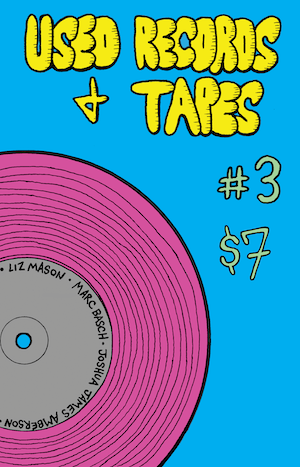
Ok, here’s a question… You also have a zine series called Used Records and Tapes, in which you and a few guests write about and review albums. Have you ever considered inviting a Reglar Wiglar regular, such as Dunc the Punk to write something for U.R.&T., or will the two worlds always remain separate?
I have not, but that’s a great idea. Some of my reviews in UR&T, at least in the first issue, have a bit of Joey Germ’s attitude, but I think I’ve mellowed out too much these days to revive those characters. Dunc the Punk is a real person, by the way. He is an irritable Brit in real life, too, so I think he had fun channeling that into his music reviews. I am sure he would resurrect Dunc if asked.
Woodrow Comics
I’ve thoroughly enjoyed reading about the fictional band The Woodrows. You’ve been writing about them for nearly forty years now. Over all this time, have you ever made any Woodrows merch? As I’ve been reading, I’ve been thinking that I’d like to get a Woodrows t-shirt or sticker. That band rules!
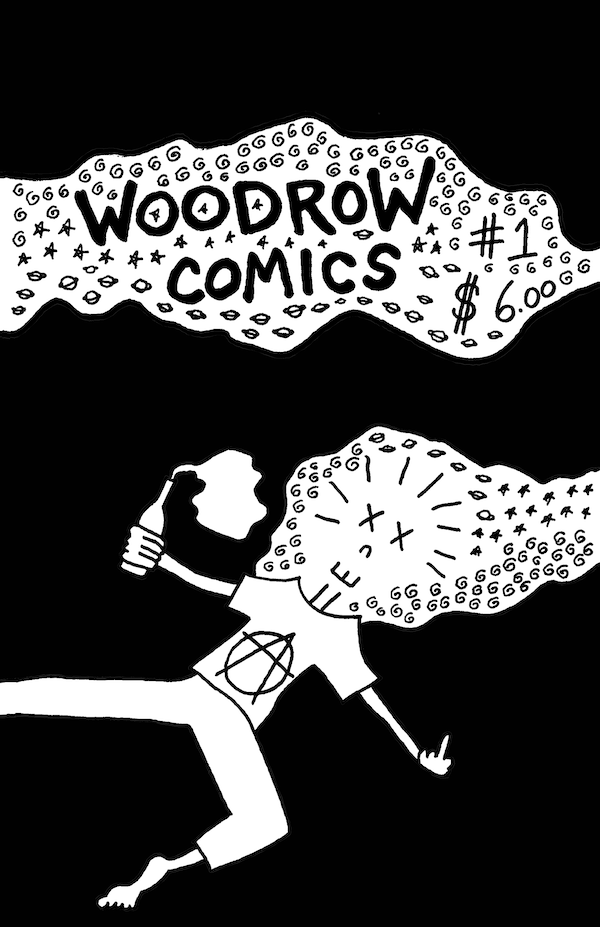
Yikes! Reading “40 years” is a bit of a shocker, but yes, I started drawing the Woodrows with a friend in high school. I have thought about creating Woodrows merch in the past, but always wondered, who would buy it? Now I know that Dave Hankins would, and that’s at least one sale! So, maybe someday. You’ll be the first to know. One project that I will probably never get around to is a Woodrows tribute album where I would ask real bands to “cover” Woodrows’ songs. That would be a huge undertaking since only the song titles exist at this point.
Music
Aside from creating fake bands, you also create real bands! It looks like your most recent group, Empire Smalls, is no longer active. Are you working on anything currently, or are you taking some time off from music?

Well, I’ve wanted to be in a band since I was probably 12 or 13, and I started my first band when I was 15 before I even had a guitar, which I got for my 16th birthday.
After I moved to Chicago for school, it took a few years to get another band going. Once that initial hurdle was over, I was in a band, playing shows, and releasing records for the next 25 years. I moved to Madison, WI, in 2012 and lived there for a little over three years, but didn’t have much luck finding people to play with. That’s when I started using the name Empire Smalls to release a few solo digital EPs on Bandcamp.
When I moved back to Chicago in 2015, the 1-piece band became a 3-piece with the addition of Mike Dixon and Tim Davison. Our debut live show was canceled due to the pandemic. When the shutdown ended, I realized I no longer had the desire to play live. When Tim moved to North Carolina a year or so later, Mike and I had a hard time replacing him, so we gave up trying. I have not done much with music since then, but I do have a dozen or so songs I’d like to finish and record someday, hopefully with guest appearances by my many talented musician friends. That record will no doubt be released on RoosterCow Records.
Gray Flag & Ridiculous Fiction
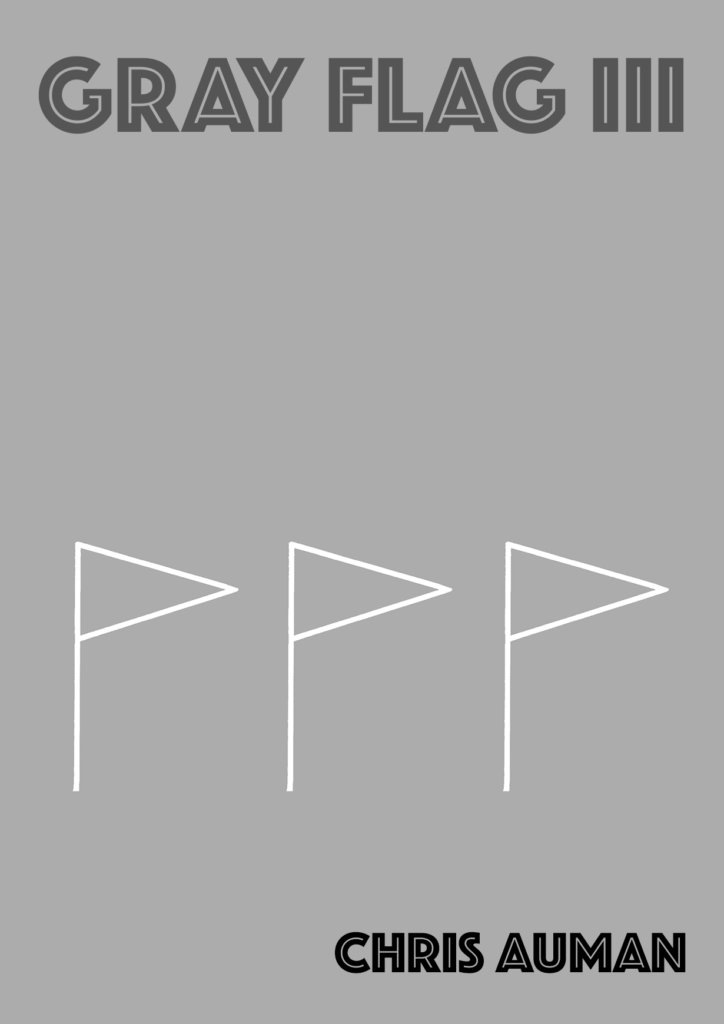
Over the past few years, you’ve been publishing zines containing material that you wrote in the early 1990s. The Gray Flag series just ended, but it looks like Ridiculous Fiction is just getting started. Issue #1, titled Old Joe, came out last summer. When can we expect issue #2?
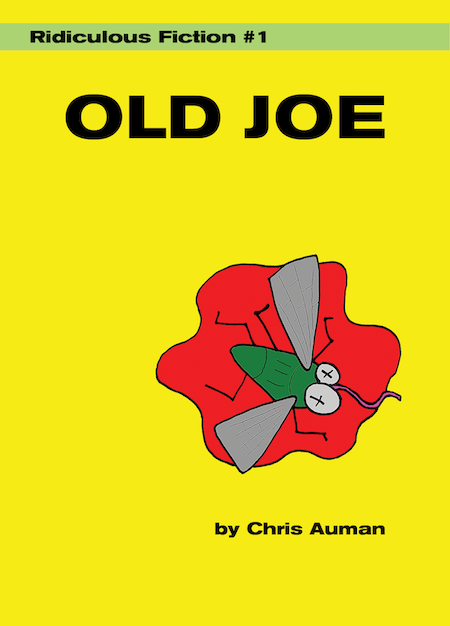
My reasoning for publishing stuff from the early 1990s is to fill in a gap in the creative timeline that exists in my head. It’s a very self-indulgent undertaking, but that’s what self-publishing is. Looking back, I realized that I have been publishing comics and little magazines (didn’t know what a zine was then) since I was 8 or 9 years old.
Not long after I bought my first copy of Mad Magazine, I started writing and drawing my own version. My high school band “released” a half-dozen cassettes that I did artwork for and dubbed on my crappy Sears stereo, but there was about a four year gap while I was in college where I was writing and drawing, but not publishing anything aside from a one-off underground newspaper.
So, Ridiculous Fiction and Gray Flag are my attempts to document that time. Ridiculous Fiction #2 should be out in 2025 at some point. It features an absurd short story I wrote at a laundromat in 1990. I have stories for more issues, but I think some of this stuff may be too ridiculous for general consumption, which means I will probably publish them anyway, maybe as Really Ridiculous Fiction.
Reglar Wiglar #30
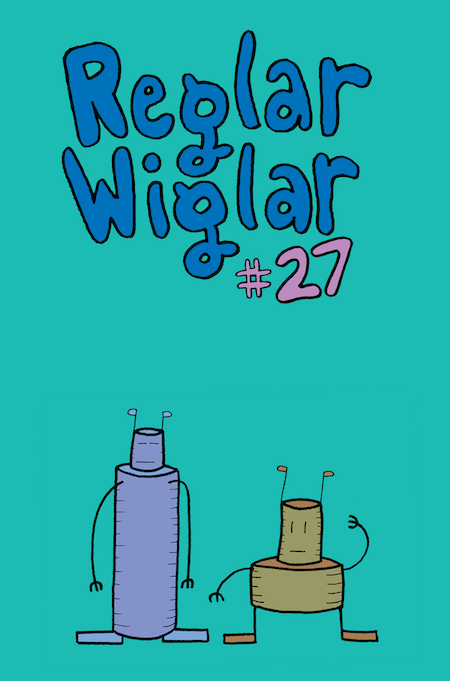
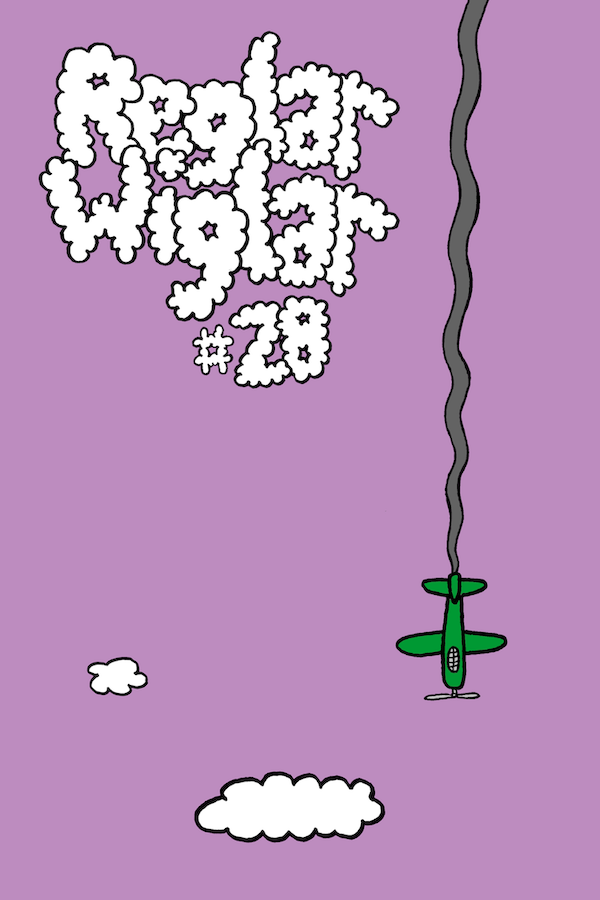
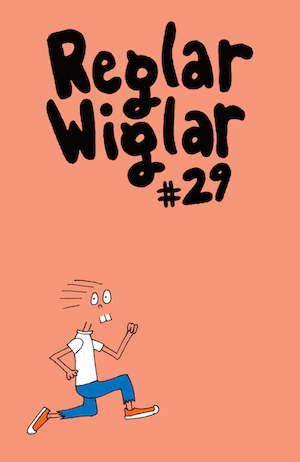
On that same note, issue #29 of Reglar Wiglar came out in 2023. Any plans for #30?
There is a plan for RW #30, which will be a collection of comics, gags, and drawings – some old some new – but all previously unpublished (I think). I hope to have that done by the end of this year as well, but we’ll see.

It appears to me the quality of the physical zine itself is just as important to you as the quality of the written content. Many of your zines are in large sizes, several of them have glossy pages, and all of the covers are thick and mostly printed in color. They really stand out amongst the rest of my collection. Even the old issues of R.W. from the 1990s are 8.5 by 11 inches with cardstock covers. Could you please share your thoughts on paper choices?
I always wanted the Reglar Wiglar to look as good as possible while being produced for as little money as possible.
The first two issues had black and white cardstock covers, and then I did all newsprint editions until I used color cardstock covers starting with issue #11. Initially, I could only afford one color, so I did a red-on-white cover, black-on-white, green-on-white, blue-on -white, etc. Once I obtained better-paying employment, I graduated to two colors, then three.
I peaked with RW #16, which was four colors, plus I drew in part of the cover drawing with a black Sharpie, so technically it was five colors.
After that, I went back to two colors but increased the page count to 100 pages. With digital printing and more affordable software options, I can finally go crazy with multicolor covers or do grayscale or black and white, as well as smaller print runs. It’s been liberating in that respect, but it still ain’t cheap to print in color.
Vincent Van Gogh
This final question is pretty far off topic, but you recently mentioned to me that you got to visit the big Vincent van Gogh exhibit that is currently happening in Boston. Please tell me a little about that experience. Was this your first time seeing original Van Gogh paintings? Did you see anything or learn anything that surprised you?
Van Gogh had been popping up in my life a lot about a year ago. It started with a book my dad gave me in 1990 called If You Want to Write, which was published in 1938. I finally started reading it last year (35 years later!), which goes to show that good advice is often wasted on young people. At any rate, the author, Brenda Uland, refers to Van Gogh’s letters quite a bit, which I never knew existed. Around the same time, I read your zine Sunflowers, which hit me at the right moment because it was such a great way to spend 30 minutes on the porch on a sunny fall afternoon, totally engrossed in one specific subject.

In January of this year, Santa gave me a copy of Van Gogh’s letters. In June, while my partner Sarah was attending a workshop in Cambridge, MA, I was killing time, strolling around Harvard Square, when I saw an ad on a bus for the Van Gogh exhibit at the Museum of Fine Arts. The next day, I took the train to Boston and spent about three hours at the museum.
I’ve been to the Art Institute of Chicago enough times in my life that I’m sure I’ve seen “The Bedroom” there, which is on loan to the Boston Exhibit. It was great to see so many of his paintings grouped together and up close. I love how he saw color and how he was willing to sacrifice so much to become a great painter, knowing he had a limited time on this planet, as we all do. He was fully aware that he was painting for future generations and not his contemporaries.
Thanks again, Chris! I’m thirty years late to the party, but Reglar Wiglar has become one of my favorite zine series. If you’ve got any new projects coming up, or anything else you’d like to tell about, please do that here.
You’re welcome. It’s never too late to join the party. As for future projects, this year should see RF#2 and RW#30, as previously mentioned, plus Woodrow Comics #2. There will be a RoosterCow records release as well, but it’s too soon to go into detail about that because there may or may not be a zine component to it. After this year, it will be time to scale back. I want to focus on finishing a graphic novel I’ve been chipping away at for the past five or six years. It will be unlike anything I’ve done in the past and it is not music-related at all. If anyone wants to stay up-to-date on any or all RoosterCow-related activities, they can sign up for the newsletter. Thanks, Dave!